
From the Arab World to the World: Launch of the Arab Declaration on Tolerance and Peace Ushers in a New Phase of Joint Arab Action
The League of Arab States and the Global Council for Tolerance and Peace crown four years of cooperation with an Arab framework to promote coexistence and counter hatred
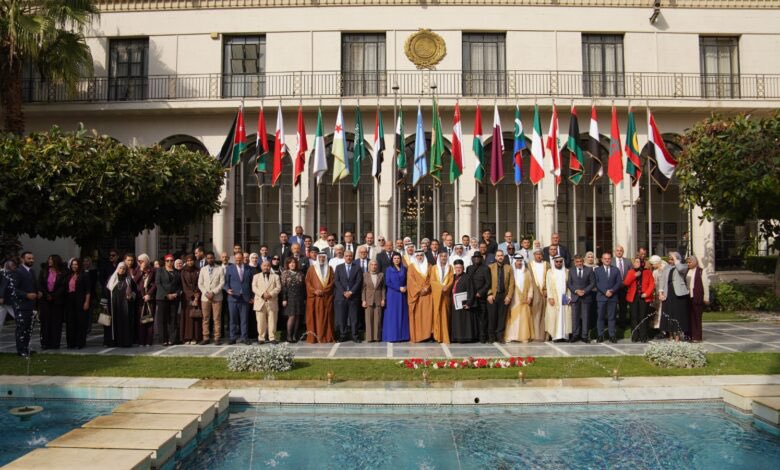
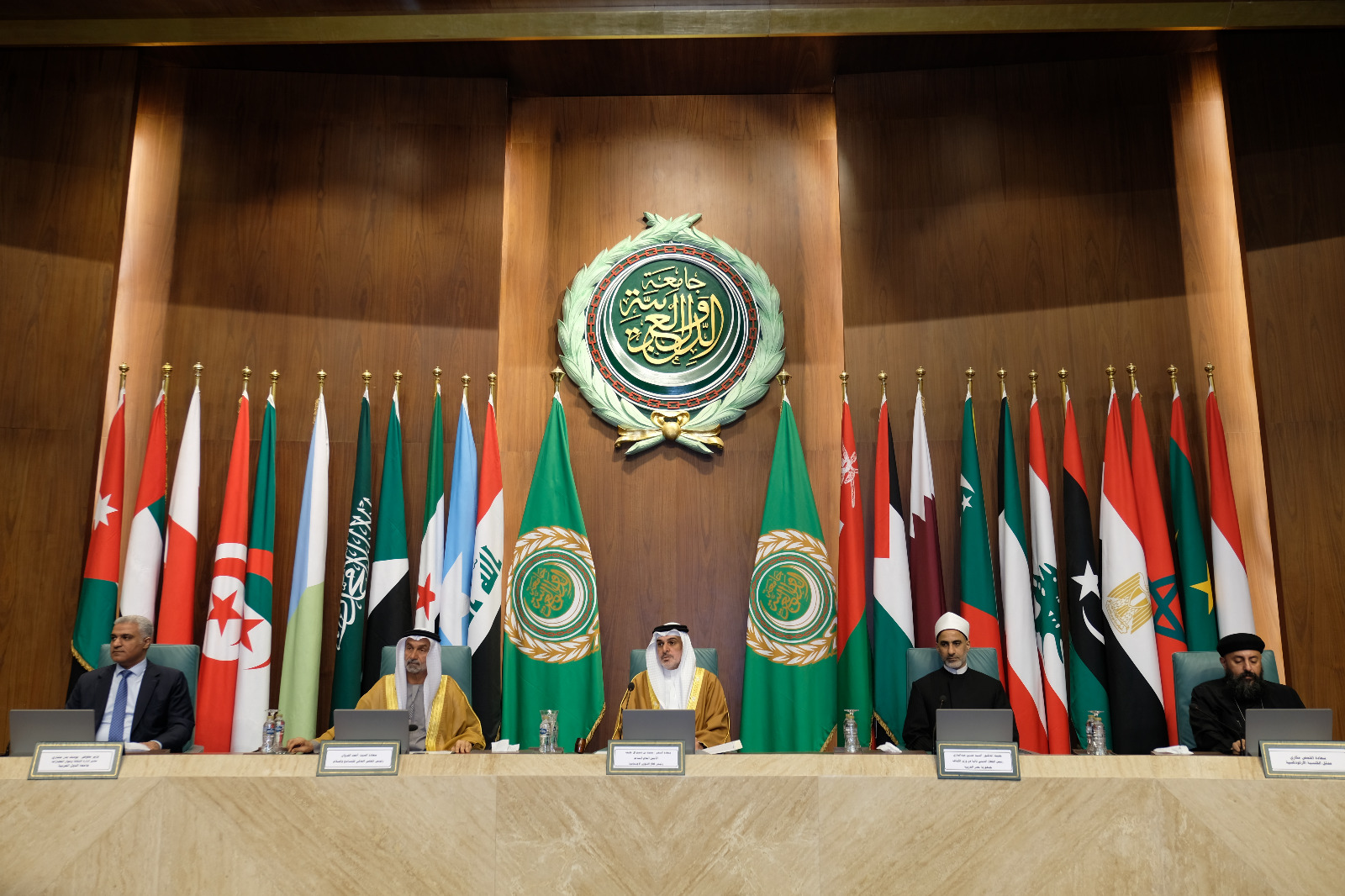
The Grand Hall at the headquarters of the General Secretariat of the League of Arab States today hosted the Arab Conference for Tolerance and Peace and the launch of the Arab Declaration on Tolerance and Peace. The event embodied an Arab consensus on strengthening the values of dialogue and coexistence, while reinforcing the region’s contribution to international efforts to build peace and prevent conflict. It coincided with the observance of the International Day for Tolerance on 16 November 2026.
Organised by the League of Arab States in cooperation with the Global Council for Tolerance and Peace (GCTP), the conference crowned four years of consultations, review and coordination among Arab states and relevant institutions, culminating in the Declaration’s adoption by the Council of the League at the ministerial level and its official launch from the “House of the Arabs”.
The conference was attended by H.E. Ahmed bin Mohamed Aljarwan, President of the Global Council for Tolerance and Peace; H.E. Sheikh Mohammed bin Daij Al Khalifa, Assistant Secretary-General of the League of Arab States; Professor Mahmoud Siddiq, representing His Eminence the Grand Imam Professor Ahmed Al-Tayeb, Sheikh of Al-Azhar; Archbishop Georges Chihane, representing His Beatitude and Eminence Cardinal Mar Bechara Boutros Al-Rahi; and Archpriest Makari, representing His Holiness Pope Tawadros II, Pope of Alexandria and Patriarch of the See of St. Mark.
The conference brought together a broad range of officials and representatives of member states to the League of Arab States, ambassadors and members of the diplomatic corps, representatives of Arab, regional and international organisations, religious leaders, academics, intellectuals, media professionals and civil society institutions, alongside young people and university students. This wide and diverse participation reflected the interest in the Declaration, the breadth of the partnership supporting its message, and the complementary roles of official, religious, intellectual and community institutions in embedding the values of tolerance and peace.
The launch marks an important milestone in joint Arab action, providing efforts to promote tolerance and peace with an approved regional framework and opening broader opportunities to coordinate initiatives, exchange expertise and develop programmes in education, media, and religious and cultural dialogue. The Council of the League of Arab States at the ministerial level adopted the Declaration on 7 September 2026, through Resolution No. 9301 at its 166th session, urging member states to implement its provisions in coordination with the General Secretariat.
Described in the conference’s introductory documents as the first declaration of its kind at the regional level worldwide, the Declaration derives particular significance from its foundation within an inclusive Arab institutional framework. It is also the outcome of a consultative process to which Arab states contributed their views and observations, reinforcing its consensual character and establishing a basis for continued cooperation towards its objectives.
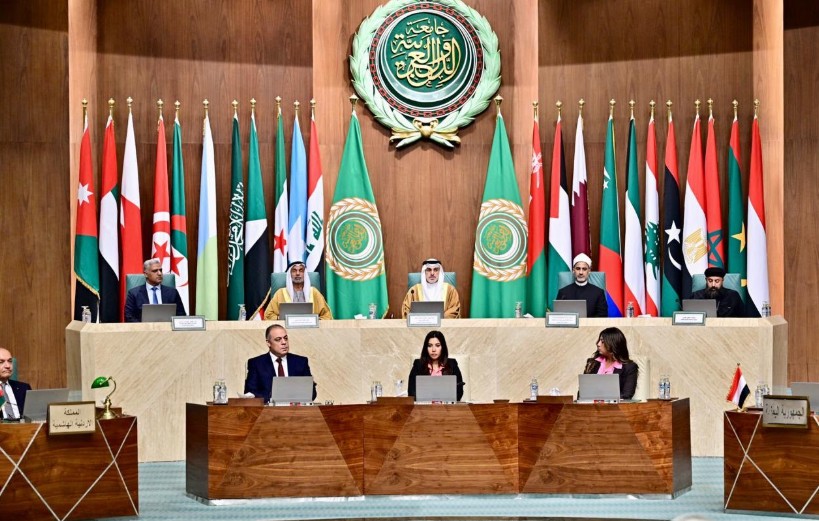
The initiative originated at the Conference on Tolerance, Peace and Sustainable Development in the Arab World, held on 17 and 18 October 2022 in cooperation between the League of Arab States and the Global Council for Tolerance and Peace. Its opening session featured the participation of His Holiness Pope Tawadros II and His Beatitude Cardinal Mar Bechara Boutros Al-Rahi, alongside official, religious and intellectual leaders. The conference concluded with a recommendation to prepare an Arab declaration on tolerance and peace. This was followed by drafting, consultations with member states and consideration of their observations, then review and approval by the Economic and Social Council in September 2025, leading to ministerial adoption and the official launch.
The launch’s coincidence with the International Day for Tolerance lends an international dimension to this Arab initiative, responding to the United Nations General Assembly’s call to strengthen efforts to promote tolerance. It also highlights the capacity of regional frameworks to support the international system through initiatives rooted in their societies and civilisational values, united by respect for human dignity and rights, state sovereignty, international law and the peaceful settlement of disputes.
In his address, H.E. Ahmed bin Mohamed Aljarwan affirmed that launching the Declaration from the “House of the Arabs” sends a clear message to the international community: “Arab states are active partners in building peace and in developing the tools that safeguard it and embed its culture among nations.”
Aljarwan commended the support and contributions of Arab states throughout the Declaration’s preparation, review and adoption. He stressed that the four years of joint work demonstrated the value of dialogue, attentive listening, respect for differing views and a commitment to finding common ground. He noted that the consensus achieved around the document reflected the practical application of the very values it advocates.
His Excellency emphasised that investing in tolerance helps prevent conflict and strengthen trust among peoples, and that societies which safeguard human dignity and raise their children to respect differences possess stronger foundations for stability and a greater capacity to confront extremism and division. He also affirmed that tolerance must go hand in hand with justice, the protection of civilians and respect for the legitimate rights of peoples.
The next phase opens opportunities to bring the Declaration’s principles into schools, universities, and media, religious and cultural institutions, while strengthening young people’s participation in peacebuilding, including in the digital sphere. The Declaration provides a basis for developing initiatives that counter discrimination and hate speech, support education that fosters respect for diversity, and connect a culture of tolerance with the requirements of stability and sustainable development.
In this context, Aljarwan called for expanded cooperation with relevant United Nations bodies, foremost among them UNESCO, to exchange expertise, develop programmes and showcase successful Arab experiences. He reaffirmed the commitment of the Global Council for Tolerance and Peace and its International Parliament for Tolerance and Peace to continuing their work with partners to broaden parliamentary, cultural and educational dialogue, and to support initiatives that bring the Declaration’s principles into institutions and communities.
His Excellency also proposed making the International Day for Tolerance an annual occasion to celebrate the Declaration, present progress achieved under its framework, exchange good practices and renew cooperation on practical steps whose implementation can be monitored, thereby sustaining the initiative’s momentum and strengthening its lasting impact.
The launch of the Arab Declaration on Tolerance and Peace affirms the ability of the League of Arab States and the Global Council for Tolerance and Peace, in partnership with Arab states and relevant institutions, to build positive consensus that serves the peoples of the region and supports the international community. It also reinforces the protection of coexistence and diversity as a shared responsibility, bringing together the efforts of states, institutions and communities to build a more secure, tolerant and peaceful future.