
President of the Global Council for Tolerance and Peace from Tokyo: Maritime Security and Middle East Stability Are a Shared International Responsibility
President of the Global Council for Tolerance and Peace from Tokyo: Maritime Security and Middle East Stability Are a Shared International Responsibility
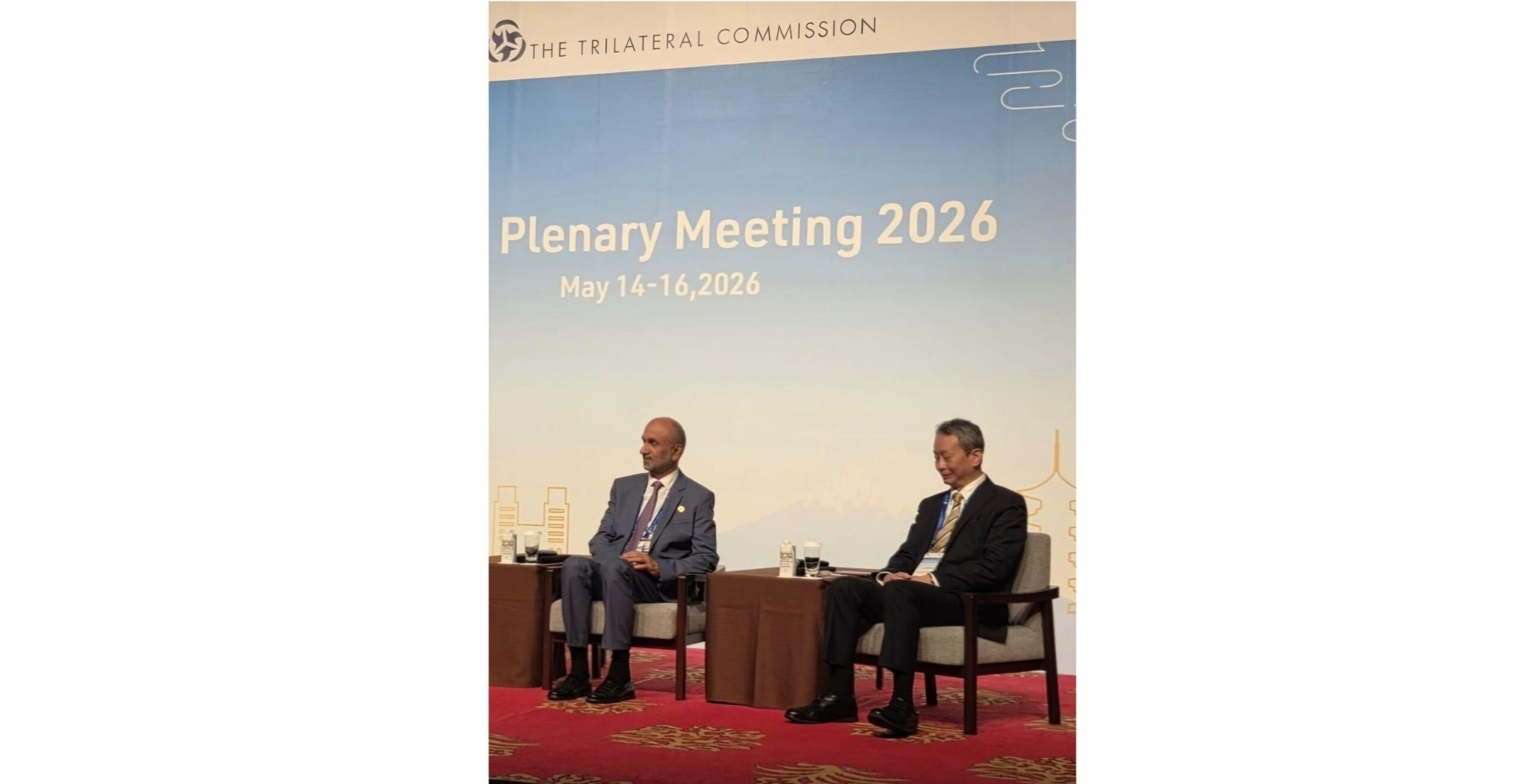
Tokyo – H.E. Ahmed bin Mohamed Aljarwan, President of the Global Council for Tolerance and Peace, participated in the high-level international conference of the Trilateral Commission held in Tokyo, bringing together prominent leaders, policymakers, and international experts to discuss the growing challenges facing the international system amid escalating crises and rapidly shifting geopolitical dynamics.
The conference opened with a recorded video message from Japanese Prime Minister Sanae Takaichi, who welcomed the participants and guests to Japan and stressed the importance of international dialogue and collective cooperation in addressing current global challenges. The opening session also featured remarks by Japan’s Minister of Defense, who reviewed the political, economic, and security developments shaping the world today, with particular focus on East Asia and its implications for international peace and stability.
During the session dedicated to the Middle East, Aljarwan stated that the region is passing through an exceptionally sensitive period marked by the intersection of political crises and security tensions. He stressed that Iranian attacks against neighboring Gulf states constitute a clear violation of sovereignty and the principles of good neighborliness, calling for a unified international stance grounded in deterrence and respect for international law in order to safeguard regional security and stability.
He also underlined the strategic importance of the Strait of Hormuz as a vital artery for the global economy and international energy security, noting that any threat to international maritime routes directly impacts global markets and international supply chains. In this context, he emphasized that protecting freedom of navigation is a shared international responsibility.
The conference sessions further addressed the rapid advancement of artificial intelligence technologies and the risks associated with their unregulated use. Participants highlighted the growing international calls for regulatory frameworks and safeguards that ensure the responsible and secure use of artificial intelligence in ways that serve humanity and preserve global peace and stability.
Aljarwan noted that the Global Council for Tolerance and Peace and the International Parliament for Tolerance and Peace, which includes 120 parliamentarians from around the world, firmly believe in the importance of strengthening direct bilateral relations between states as one of the most effective means of containing crises, building trust, and achieving sustainable and practical outcomes. He called for expanding channels of direct dialogue and cooperation among nations in support of international peace and security.
Addressing the situation in Gaza, Aljarwan stressed that the absence of a just and comprehensive solution to the Palestinian cause remains one of the principal sources of instability and tension in the region. He emphasized the urgent need to protect human lives before focusing on reconstruction efforts and reaffirmed the Palestinian people’s right to live with dignity in accordance with international law and relevant international resolutions.
Responding to a question during the discussion session on Lebanon, Aljarwan said that Lebanon, with all its diverse components, is a peace-loving nation that deserves stability. He expressed hope that Lebanon would regain its historic role as the “Switzerland of the Middle East” through strengthened governmental and diplomatic efforts aimed at steering the country away from conflict, reducing external interference, and encouraging the international community and Lebanon’s friends to provide greater support for the country’s stability and border security.
Aljarwan concluded by affirming that sustainable peace cannot be achieved through slogans alone, but through practical policies based on respect for state sovereignty, meaningful dialogue, and confidence-building among peoples. He reaffirmed the commitment of the Global Council for Tolerance and Peace to continue promoting a culture of tolerance and strengthening bridges of understanding among nations and societies.