
The Global Council for Tolerance and Peace Affirms from Beirut the Importance of Dialogue in Building Trust and Promoting a Culture of Acceptance
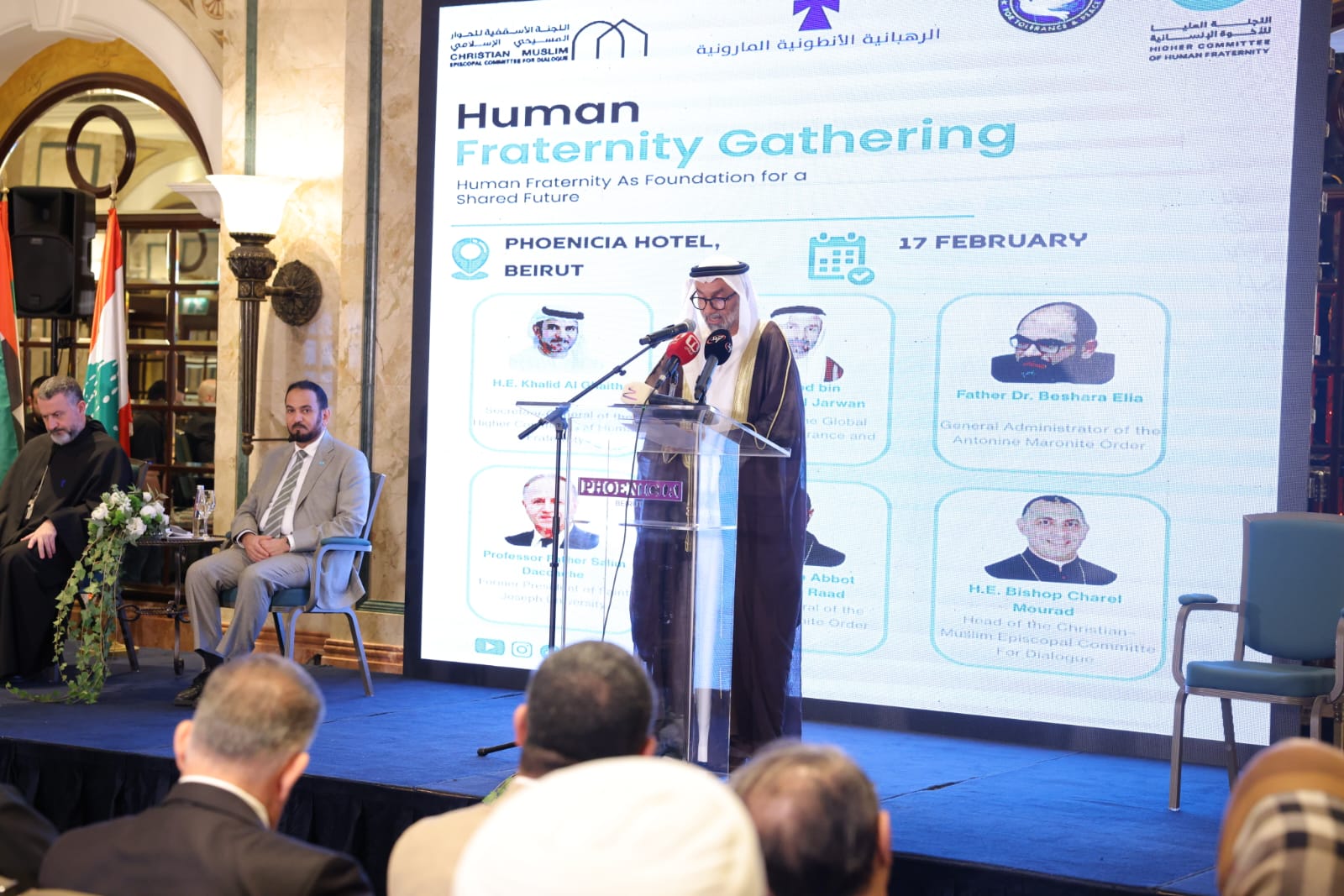
The Global Council for Tolerance and Peace affirmed the importance of fostering dialogue among religions and cultures as a fundamental civilizational choice for building trust, promoting moderation, and spreading a culture of acceptance of others. This came during the participation of H.E. Ahmed bin Mohammed Al Jarwan, President of the Council, in the meeting held at the Phoenicia Hotel in Beirut under the theme “Human Fraternity as the Foundation for a Shared Future,” on the occasion of the International Day of Human Fraternity.
In his address, H.E. Al Jarwan stressed that holding the meeting in Lebanon reflects the symbolic significance of the country as a historic model of coexistence among cultures and religions. He affirmed that the Document on Human Fraternity, signed in Abu Dhabi in 2019 by His Eminence the Grand Imam of Al-Azhar, Professor Dr. Ahmed Al-Tayeb, and His Holiness Pope Francis, represents a pivotal milestone in the course of human thought, as it laid the foundations for a civilizational project based on mutual recognition, respect for human dignity, and the rejection of extremism.
He further explained that the world is passing through a critical phase marked by rising hate speech and deepening divisions, making dialogue an existential necessity for building a more stable and just future. He emphasized that translating the principles of human fraternity into educational and cultural policies, as well as daily practices, is a shared responsibility among leaders, institutions, and societies.
H.E. Al Jarwan also affirmed the Global Council for Tolerance and Peace’s support for all efforts aimed at promoting coexistence and spreading a culture of tolerance, reiterating the importance of supporting Lebanon in its path toward stability and prosperity in a way that strengthens the values of shared living in the region. He expressed hope that the meeting would represent an additional step toward a more just and peaceful world.
The meeting was organized at the invitation of the Higher Committee of Human Fraternity in the United Arab Emirates, the Antonine Maronite Order, and the Episcopal Commission for Christian–Muslim Dialogue in Lebanon, with broad participation from religious, official, and academic leaders.
Among those present were the representative of the President of the Lebanese Republic, General Joseph Aoun — Presidential Advisor for Human Rights and Freedom of Religion Mr. Habib Afram; the representative of Maronite Patriarch Cardinal Mar Bechara Boutros Al-Rai — Bishop Elias Nassar; the Secretary-General of the Higher Committee of Human Fraternity in the United Arab Emirates, Ambassador Khalid Al Ghaith; the representative of the Druze Sheikh Aql Sami Abi Al-Muna — Sheikh Fadi Al-Attar; the representative of the Minister of Interior and Municipalities, Brigadier General Ahmad Al-Hajjar — Commander of the Gendarmerie Brigadier General Jean Aouad; the representative of the Minister of Defense, Major General Michel Menassa — Brigadier General Zaher Souma; the representative of the Army Commander, General Rodolphe Haykal — Brigadier General Haitham Qaddoura; the representative of the Director General of the Internal Security Forces, Major General Raed Abdullah — Brigadier General Joseph Muslim; the representative of the Director General of State Security, Edgar Lawandos — Lieutenant Colonel Daniel Al-Sayed; the Superior General of the Antonine Maronite Order, Abbot Joseph Bou Raad; and the President of the Episcopal Commission for Christian–Muslim Dialogue in Lebanon, Bishop Charbel Mourad, along with a number of bishops, priests, nuns, and religious and civil figures.
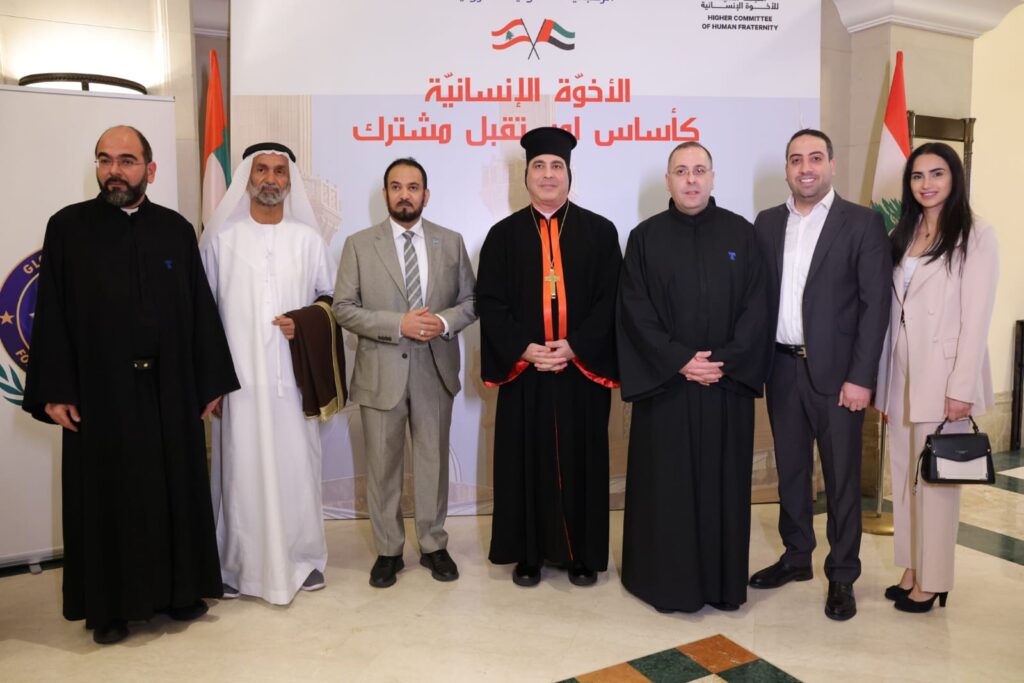
Participants highlighted the importance of the Document on Human Fraternity as a moral and civilizational reference for promoting coexistence and mutual understanding among peoples, emphasizing the role of education, culture, and media in consolidating values of mutual respect and strengthening social cohesion.
The program included the screening of a film on the concept of human fraternity, musical and artistic performances, and concluded with the distribution of honorary shields to distinguished participants, symbolically affirming the importance of joint efforts to translate the values of human fraternity into a tangible reality that serves peace and sustainable development.